Decorative Concrete Patio Ideas for North Carolina Homes | Platinum Concrete
Outdoor living is a way of life in North Carolina. With mild springs, warm summers, and beautiful fall seasons, there's no better place to invest in your backyard and a decorative concrete patio is one of the best ways to do it. Whether you're envisioning a quiet retreat for morning coffee or an entertainer's paradise with a built-in grill area and fire pit surround, decorative concrete gives you the beauty, durability, and design flexibility to bring that vision to life.
What Is Decorative Concrete, Exactly?
Decorative concrete is standard concrete that has been enhanced through color, texture, pattern, or finish techniques to create a visually striking surface. Far from the plain gray slab most people picture, decorative concrete can realistically mimic the look of natural stone, brick, slate, wood, or tile at a significantly lower cost and with better long-term durability.
At Platinum Concrete, we specialize in several decorative techniques that are especially popular with North Carolina homeowners:
Stamped Concrete: The Most Popular Choice
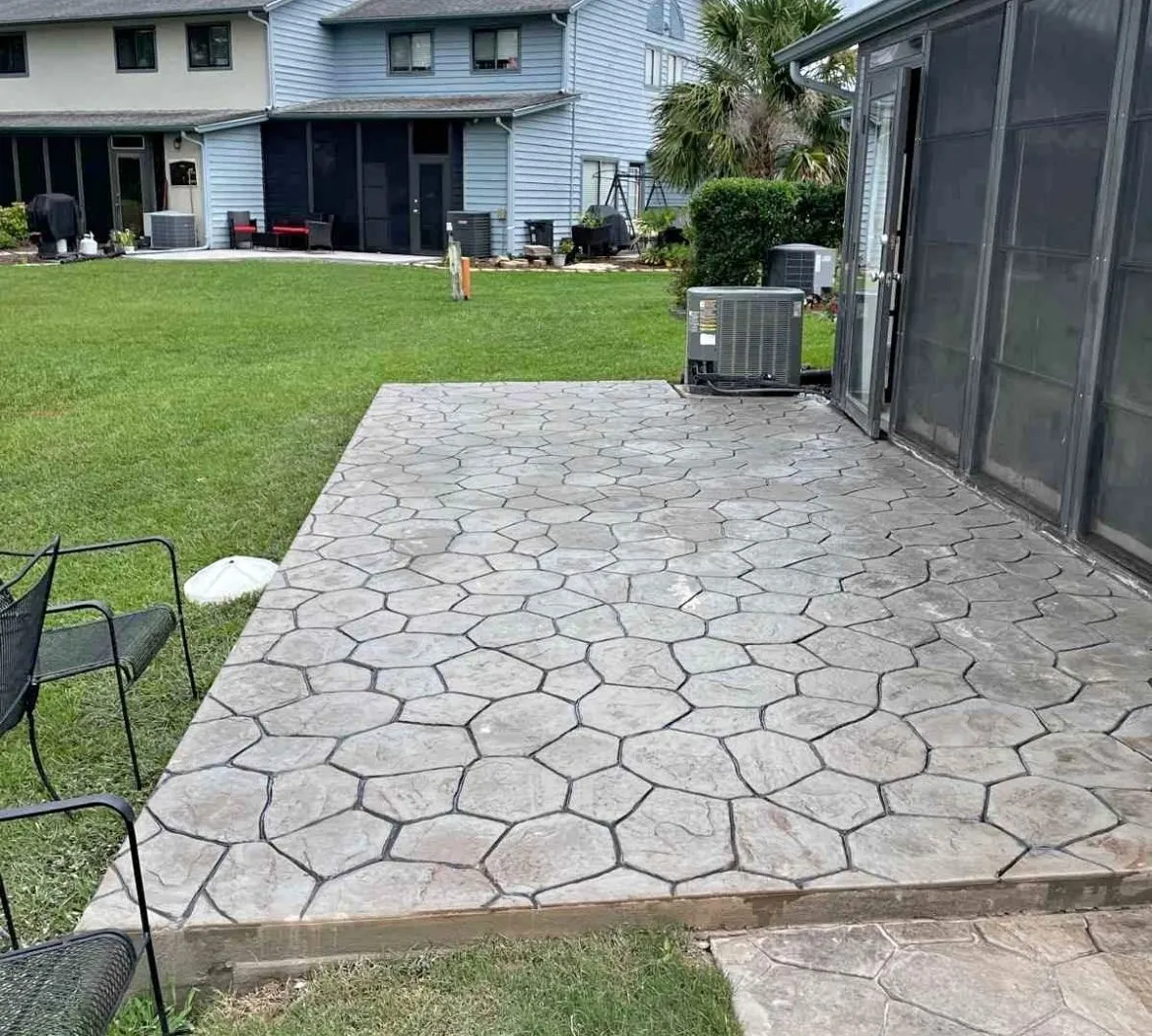
Stamped concrete involves pressing large rubber stamps into freshly poured concrete to create patterns and textures. The most popular patterns in North Carolina include:
Ashlar slate: A sophisticated, irregular stone pattern that works beautifully for traditional and transitional home styles.
Cobblestone: Timeless and charming, cobblestone patterns add old-world character to patios, walkways, and driveways alike.
Wood plank: Perfect for homes near the water or in wooded settings, this pattern captures the warmth of wood without the maintenance.
Flagstone: A classic choice for patios, flagstone patterns have an organic, natural look that blends seamlessly with landscaping.
Stamped concrete is typically combined with a base color (integral pigment mixed throughout the slab) and a release color (a contrasting tone pressed into the surface during stamping), which together create depth and realism that's hard to distinguish from the real thing.
Colored Concrete: Subtle Elegance or Bold Statements
Color alone can dramatically transform the appearance of a patio. There are two primary methods of coloring concrete:
Integral coloring mixes pigment directly into the concrete before it's poured, so the color runs throughout the entire slab. This is the most durable option because it won't fade, peel, or wear away even under heavy foot traffic.
Acid staining applies reactive chemicals to the cured concrete surface, creating variegated, translucent tones that penetrate deep into the material. Acid-stained concrete has a rich, mottled appearance that looks organic and unique no two slabs look exactly alike.
Earth tones are particularly popular in North Carolina warm tans, terracottas, and slate grays that complement the region's natural landscape. Bolder choices like charcoal, deep red, or sage green can make a dramatic statement when paired with the right landscaping.
Exposed Aggregate: Texture and Natural Beauty
Exposed aggregate concrete reveals the natural stones, pebbles, and sand within the concrete mix by washing away the surface paste during finishing. The result is a rich, textured surface with genuine visual depth.
This finish is especially practical for patios because the natural texture provides excellent slip resistance important around pool areas or in regions with frequent rain. It's also highly durable and ages beautifully, developing character over time rather than looking worn.
Designing Your Patio: Practical Considerations
Beyond aesthetics, a well-designed patio needs to account for several practical factors:
Drainage: The slab should be slightly pitched (typically 1/8 inch per foot) to direct water away from the house foundation.
Size and layout: Account for furniture, traffic flow, and the activities you want to accommodate. Most families find that 300 to 500 square feet is a comfortable starting point.
Shade and sun exposure: Consider how the sun moves across your yard at different times of day and whether a pergola or covered section might be worth incorporating.
Transitions: How your patio connects to the lawn, garden beds, and home's interior matters both aesthetically and practically.
Our team at Platinum Concrete walks through all of these considerations during your free on-site estimate. We're not just concrete pourers we're partners in helping you design an outdoor space you'll love for decades.
Is Decorative Concrete Worth the Investment?
Absolutely. While decorative concrete costs more upfront than plain poured concrete, it adds genuine value to your property. Real estate professionals consistently note that well-designed outdoor living spaces increase home sale prices and reduce time on market in North Carolina's competitive housing market.
From a maintenance standpoint, decorative concrete is also a winner. A quality sealant applied every two to three years is all it needs to stay looking its best far simpler than maintaining natural stone, wood decking, or paver systems.
Seeing the Possibilities
We know that choosing a finish can feel overwhelming when you're starting from scratch. That's why we offer a free Concrete Design Guide full of patterns, color combinations, and layout inspiration to help you begin planning. We'll also walk you through project photos from past North Carolina jobs so you can see how different finishes look in real-world settings similar to your own home.
Ready to design your dream patio? Download our free Concrete Design Guide or call Platinum Concrete at (252) 598-8362 to schedule your no-pressure, free estimate.
